

SNE + CLOUD & CEH
What you'll learn
- You'll gain a powerful combination of skills from A+, Network+, CCNA (200-301), RHCE, and AWS certifications—making you versatile across networking, Linux systems, and cloud platforms.
- The course welcomes beginners! While basic knowledge of IPs, switches, and routers is helpful, it isn’t mandatory—ideal for those starting their IT journey.
- The AWS certification part equips you with essential cloud skills that businesses urgently need to drive digital transformation.
- Red Hat Enterprise Linux Automation with Ansible teaches you to automate system management—boosting efficiency and reducing manual tasks at scale.
- Certified Ethical Hacker (CEH) training prepares you to legally test and secure networks by simulating cyberattacks—turning you into a security asset for any organization.
Learning Objectives
- SNE + CLOUD & CEH
Course content
- 60 Modules
- 28 Sessions
- 4.5 Months Duration
HARDWARE BASICS
Understand system modules and their roles in computing
Learn about CPU chips, architectures, and performance features
Explore BIOS and UEFI and their role in system booting
Study motherboard components and architecture
Know RAM terminology and memory types
Identify and use various ports, cables, and connectors
Understand printer components and operational mechanisms
INSTALLING AND CONFIGURING HARDWARE
Install internal components: hard drives, optical drives, and expansion cards
Set up external devices: keyboards, mice, monitors, and more
Understand hardware compatibility and system requirements
Configure peripheral devices for optimal performance
Assemble and upgrade hardware components effectively
Build and maintain efficient and reliable IT infrastructure
MAINTENANCE AND TROUBLESHOOTING
Understand the importance of preventive maintenance
Follow essential safety procedures and handling practices
Perform routine checks to maintain system health
Manage and replace hardware components efficiently
Apply systematic troubleshooting techniques
Diagnose and resolve hardware issues to minimize downtime
Enhance overall system stability and reliability
OPERATING SYSTEM BASICS
Understand core functions of operating systems
Learn process and memory management techniques
Explore file system organization and user interfaces
Identify major system files and their roles
Manage files and directories effectively
Perform disk partitioning and basic disk management
Optimize computing environments through OS administration
INSTALLING AND CONFIGURING OPERATING SYSTEM
Install and upgrade various versions of Windows OS
Understand boot sequences and startup methods
Load and configure device drivers for hardware compatibility
Manage system applications and services
Customize system settings to meet user or organizational needs
Ensure proper OS functionality and performance
Support system recovery and startup troubleshooting
TROUBLESHOOTING OPERATING SYSTEMS
Analyze OS error codes and startup messages
Identify and resolve common operating system problems
Use Event Viewer to monitor and investigate system events
Apply System Restore for recovery from configuration issues
Utilize Command Prompt for advanced troubleshooting
Repair and optimize system performance
Ensure system reliability and maximum uptime
NETWORKING FUNDAMENTALS
Understand essential networking devices and their functions
Explore types of networks (LAN, WAN, MAN, etc.)
Learn common network topologies and their applications
Identify LAN cable types and follow color coding standards
Study core networking protocols and their roles
Master IPv4 and IPv6 addressing schemes
Apply subnetting techniques (FLSM and VLSM)
Understand virtualization fundamentals in networking
NETWORK ACCESS
Understand VLANs and interswitch connectivity
Learn CDP (Cisco Discovery Protocol) and LLDP (Link Layer Discovery Protocol)
Configure EtherChannel using LACP for redundancy and load balancing
Study Spanning Tree Protocol (STP) and Rapid PVST+ to prevent network loops
Explore wireless architectures and deployment models
Understand access point modes and wireless LAN controller functions
Implement secure and scalable wireless networks
architecture and Access Point modes are also covered, along with Wireless LAN Controller (WLC)
IP CONNECTIVITY
Understand Cisco’s hierarchical network design model
Learn router components and boot process
Operate routers in different modes (user, privileged, global config)
Implement router security best practices
Configure static, default, and OSPFv2 routing protocols
Perform Cisco IOS backup and recovery procedures
Understand and apply First Hop Redundancy Protocols (FHRP)
IP SERVICES
Understand Cisco’s hierarchical network design model
Learn router components and boot process
Operate routers in different modes (user, privileged, global config)
Implement router security best practices
Configure static, default, and OSPFv2 routing protocols
Perform Cisco IOS backup and recovery procedures
Understand and apply First Hop Redundancy Protocols (FHRP)
SECURITY FUNDAMENTALS
Understand core security concepts and frameworks
Design and implement effective security controls
Configure Virtual Private Networks (VPN)
Apply Access Control Lists (ACL) for traffic filtering
Implement DHCP snooping and port security
Use AAA (Authentication, Authorization, Accounting) for user access management
Secure wireless networks with modern security protocols
AUTOMATION AND PROGRAMMABILITY
Compare traditional and automated network management
Understand Software-Defined Networking (SDN) fundamentals
Use RESTful APIs for programmable network control
Implement configuration management with Puppet, Chef, and Ansible
Interpret and manipulate JSON-encoded data
Integrate automation tools with cloud and network platforms
Enhance operational efficiency and reduce configuration errors
RED HAT ENTERPRISE LINUX MODULES
These modules provide a comprehensive foundation in Red Hat Enterprise Linux (RHEL) administration, covering from basic commands to advanced system management:
Getting Started with RHEL: Understand open source concepts, Linux distributions, and the Red Hat ecosystem, establishing a solid base for Linux system administration.
Command Line Access: Gain proficiency in shell usage to log into systems and run essential commands efficiently.
File Management: Learn to manipulate files using Bash shell commands, essential for daily administration tasks.
Help Systems: Use built-in help tools for problem-solving and learning.
Text File Editing: Manage configuration and log files with text editors.
User and Group Management: Create and maintain user accounts and groups with secure password policies.
File Permissions: Control access using Linux file permissions and ACLs to protect sensitive data.
Process Management: Monitor and control running processes to optimize system resources.
Service Control: Manage system services and daemons using systemd, ensuring critical applications run reliably.
SSH Configuration: Secure remote management with SSH setup and best practices.
Logging and Troubleshooting: Analyze system logs for proactive troubleshooting.
Networking: Configure network interfaces and ensure connectivity.
Archiving and Transfer: Master file archiving and transfer across systems.
Software Management: Install and maintain software packages from repositories.
Storage Management: Create and maintain physical and logical storage, including advanced features like Stratis and VDO for optimized storage use.
Boot Process: Understand and control the system boot sequence for troubleshooting and performance tuning.
SELinux: Implement mandatory access control policies to enhance security.
Automation with Ansible: Learn to automate Linux administration tasks with Ansible playbooks, simplifying large-scale system management.
AWS CERTIFIED SOLUTIONS ARCHITECT – ASSOCIATE
Prepare for AWS cloud certification by mastering cloud fundamentals, security, architectural design, and cost management:
Cloud Computing and AWS Overview: Understand cloud concepts, deployment and service models, and navigate AWS account setup with free tier and billing.
Designing Secure Architectures: Implement Identity and Access Management (IAM), multi-factor authentication, Single Sign-On (SSO), encryption via KMS, and protective services like AWS WAF and Shield.
Designing Resilient Architectures: Utilize AWS services such as API Gateway, Lambda, ECS, EKS, and load balancers to build fault-tolerant, highly available applications.
High-Performance Architectures: Optimize compute, storage, and database solutions with EC2, Auto Scaling, Aurora, DynamoDB, and caching strategies.
Cost Optimization: Manage cloud spend effectively using AWS Cost Explorer, Budgets, and reporting tools.
ETHICAL HACKING AND PENETRATION TESTING
Develop skills to ethically test and secure IT systems by understanding various attack vectors and mitigation techniques:
Introduction to Ethical Hacking: Learn the ethical hacking framework, methodology, and legal considerations.
Reconnaissance and Scanning: Perform footprinting, network scanning, and enumeration to gather intelligence about targets.
Vulnerability Analysis and System Hacking: Identify and exploit vulnerabilities while maintaining ethical boundaries.
Malware and Sniffing: Understand malware threats and techniques to monitor network traffic.
Social Engineering and DoS Attacks: Learn how attackers manipulate human behavior and disrupt services.
Session Hijacking and IDS Evasion: Techniques to intercept sessions and bypass security mechanisms.
Web and Wireless Hacking: Exploit vulnerabilities in web applications, servers, wireless networks, and mobile platforms.
IoT and Cloud Hacking: Assess risks and attack vectors in Internet of Things devices and cloud infrastructures.
Cryptography: Use cryptographic techniques to secure communication and data.
Bug Bounty Hunting: Introduction to vulnerability disclosure programs and practical penetration testing.
Description
SNE+Cloud combines the latest version of A+, N+, CCNA(R&S) 200-301, RHCE & AWS Certification. There is no prerequisite for taking up the CCNA Training; however a fundamental Knowledge of IP, basic switches and routers would be added advantage. Organizations need individuals with cloud skills to help transform their business. Red Hat Enterprise Linux Automation with Ansible teaches the skills needed to manage large numbers of systems and applications efficiently and consistently. Certified Ethical Hacker(CEH) is a professional designation for a person who has obtained a qualification that allows them to perform specific services for various companies. As their name would suggest, ethical hackers are certified personnel qualified to penetrate a company’s computer systems (by their permission) in an attempt at determining whether there are any vulnerabilities. Additionally, an ethical hacker will also undertake all preventive and corrective measures needed to protect the system against any real attacks that may happen in the future.
Mapped Certificate
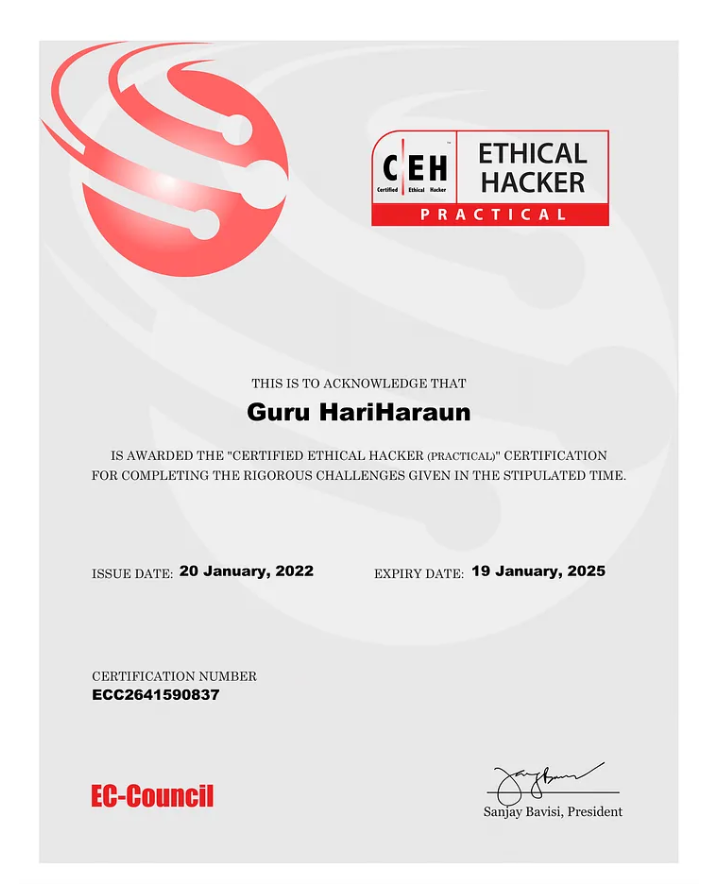
Certified Ethical Hacker
via CEH Practical
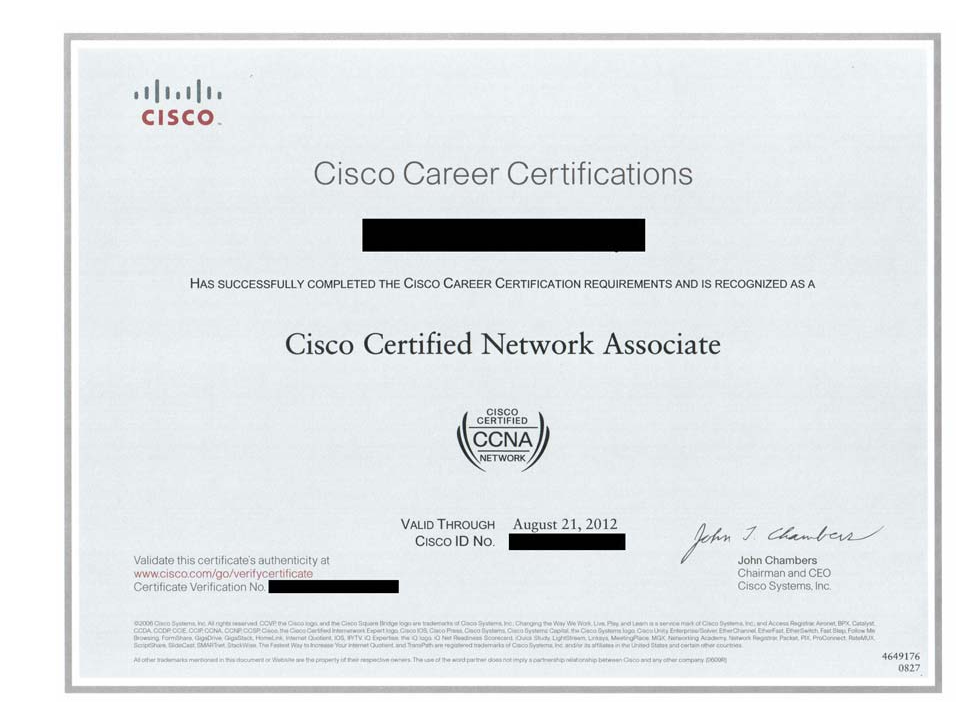
Cisco Certified Network Associate
From CISCO
EXCELLENTTrustindex verifies that the original source of the review is Google. I am completed with python with data analytics course in IIE It's for good teaching best experience for placement training so I will like for Indra institute of education in Gandhipuram branch.Posted onTrustindex verifies that the original source of the review is Google. I have completed the data analytics course . The mentor was friendly to approach and they taught us all the concepts well and it was useful.Posted onTrustindex verifies that the original source of the review is Google. GoodPosted onTrustindex verifies that the original source of the review is Google. great place to study ccna ..sindhu mam really helped me a lot to finish my ccna coursePosted onTrustindex verifies that the original source of the review is Google. Successfully completed in networking and cloud course.thanks to iie teamsPosted onTrustindex verifies that the original source of the review is Google. Best institute in coimbatorePosted onTrustindex verifies that the original source of the review is Google. Best training institute in coimbatorePosted onTrustindex verifies that the original source of the review is Google. Best place to learn Data science and Machine Learning..Thanks IIE teamPosted onTrustindex verifies that the original source of the review is Google. Best place to learn data science in Coimbatore..Thanks IIE teamPosted onTrustindex verifies that the original source of the review is Google. I'm the student of indra institution in coimbatore. Here, to gave a well traning and good teaching of all students. Now , I'm placement to company. Thank you all
Get 15% OFF On This Course Now!
Learn Smarter, Not Hearder
Enjoyable Learning
Experience Awiat You
Our courses are taught by experienced professionals and subject matter experts who are passionate.
10,000
Daily Active Users
60%
Courses Enrollment Rate

4.7
Ratings
by 12 Learners
Frequently Asked Questions
Got Questions? We've Got Answers!
Who should join this course?
IT graduates, network/system admins, cloud aspirants, and cybersecurity enthusiasts who want a multi-domain skillset should take this course.
Do I need any prior IT experience?
No prior experience is required. The course starts from the basics and progresses to advanced cloud and security concepts.
What are the career opportunities after this course?
You can become a System Administrator, Network Engineer, Cloud Administrator, DevOps Engineer, or Ethical Hacker/Cybersecurity Analyst.
What will I learn in the Cloud module?
You’ll learn AWS Cloud fundamentals, compute and storage services (EC2, S3, RDS), security groups, Route 53, and automation tools like Ansible, Docker, and Kubernetes.
Lets find your Perfect online courses today!
Empower Yourself with Expert-Lead Learning Anytime, Anywhere


